

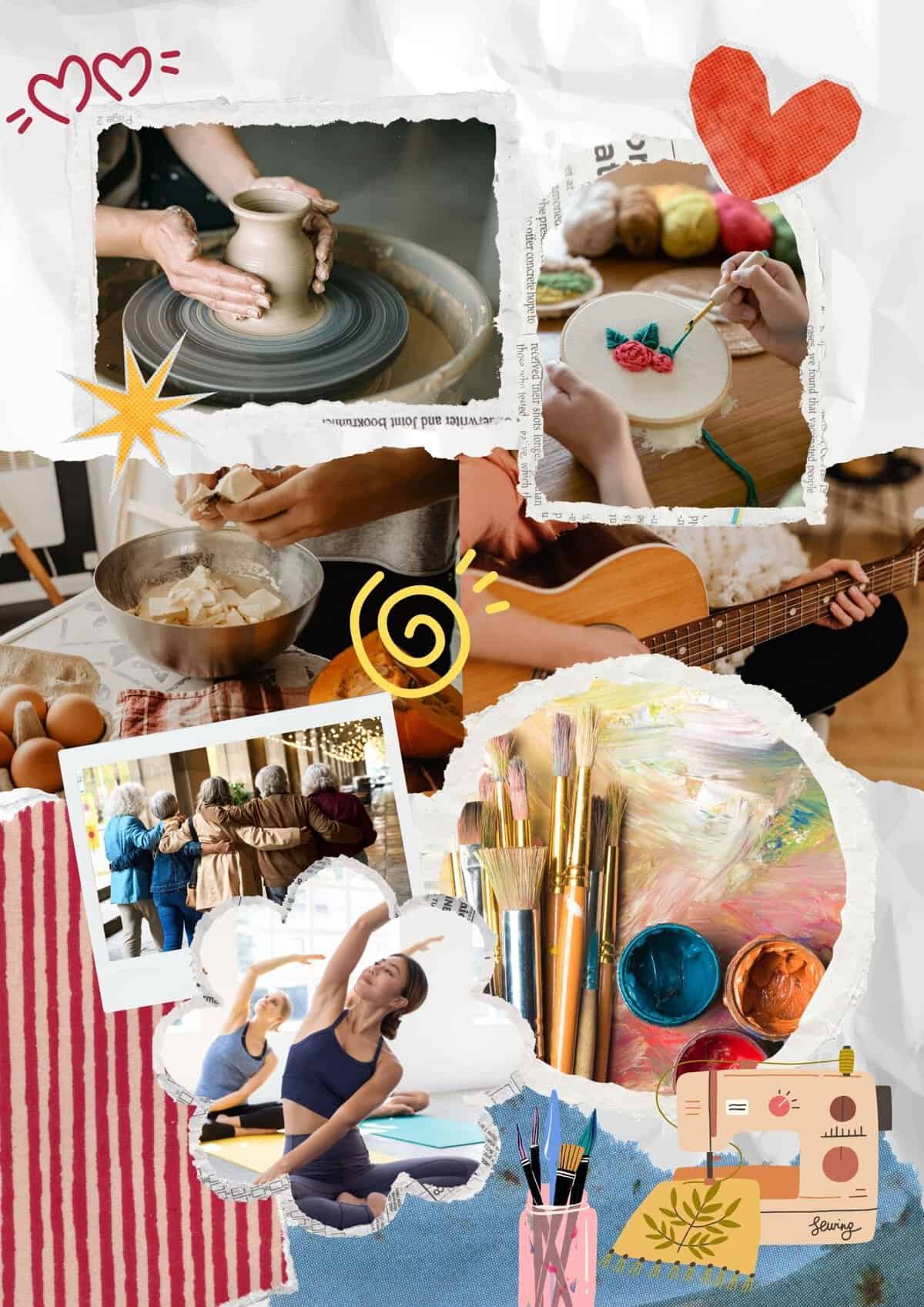
For a long time, I didn't really have hobbies. I worked. A lot. And because I work for myself, there was always something else I could be doing. Another project to finish, another idea to work on, another thing to check off the list.
Eventually, work had quietly become pretty much all I was doing. I was burnt out, and more than anything, I missed being creative just for the sake of being creative.
So I started really small...I bought a beautiful adult coloring book on Amazon and a set of watercolor markers. There was no goal. I wasn't trying to get good at anything or turn it into something productive. I just sat down and colored.
And I loved it.
That led to paint-by-number kits, then punch needle, needlework and making little felted animals. I kept trying things simply because they looked fun.
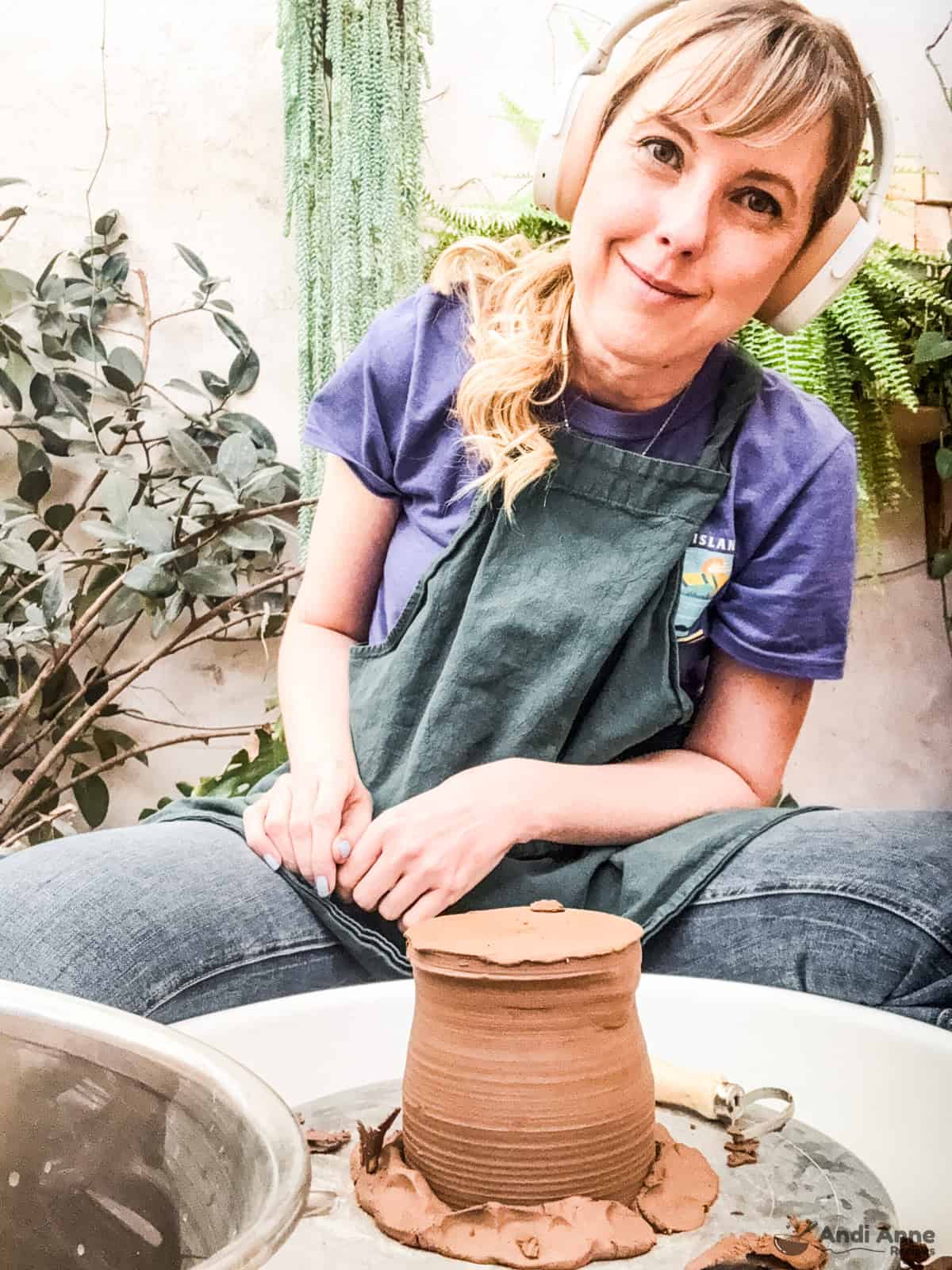
Eventually, I found pottery. Now I belong to a local pottery studio and go every week. It's become a regular part of my life and something I genuinely look forward to.
Somewhere along the way, I realized how important it is - especially as women - to have things in our lives that are simply ours.
And a hobby doesn't have to mean making something. It doesn't have to make money. You don't need to be talented at it. You don't have to post about it. And you definitely don't have to stick with it forever.
Sometimes you just need something that gets you away from work, responsibilities and your phone for a while - and gives you something to look forward to.
So if you've been thinking, I need a hobby, but have absolutely no idea what you'd enjoy, here are 100 hobbies to try.
Instead of organizing them into arbitrary categories, start with what you're craving right now.
Choose your own adventure by navigating to these sections:
I Want to Make Something
If you've been missing creativity in your life like I was, this is where I'd start.
And don't immediately tell yourself you're "not creative." You don't need to know how to draw or have some hidden artistic talent. There are plenty of creative hobbies where you can start with a kit and simply follow the instructions.
1. Adult Coloring
This was my gateway hobby. Find a coloring book you genuinely love - not one that feels like it was made for kids - and experiment with markers, colored pencils or watercolor markers.
It's inexpensive, easy to pull out whenever you have 20 minutes, and requires absolutely no artistic ability. I used to color at night before bed to help me relax and wind down.
2. Paint by Number
Modern paint-by-number kits are surprisingly beautiful! Everything is already mapped out for you, so you get the satisfaction of painting without having to stare at a blank canvas wondering what on earth to do. I love working on this landscape paint-by-number that I got on Amazon. The colors are surprisingly beautiful. We also got this animal paint-by-number kids set and this turtle paint-by-number for my daughter.
3. Pottery
Pottery ended up being the hobby that really stuck for me. I took an intro to wheel throwing class and I was immediately humbled... it's a lot harder than it looks! One instructor described it like learning an instrument - you're not going to be able to learn to read music and play a song on the first day.
Over time i've taken numberous wheelthrowing classes and handbuilding classes. I've created things with my daughter too! It's basically like therapy for me and I now go to a local pottery studio once a week for my "therapy session."
You can look for a one-time beginner class at a local pottery studio before buying anything (remember to lower your expectations of coming out with the perfect mug on day 1). And if you love it, many studios offer memberships where you can use their wheels, tools and kilns.
4. Punch Needle
Punch needle uses yarn and a special tool to create textured designs on fabric. I love it because there's a low learning curve and you can complete a project rather quickly. These are great for camping trips! I've ordered a few kits on Amazon - this flower punch needle design was my first kit and super easy to complete. My daughter did this fox punch needle kit and it's super cute. And now we're working on these dog coasters.
Beginner kits usually contain everything you need, making this another very easy hobby to try without a big investment.
There's also great seasonal ones on Amazon! I want to get this Santa punch needle kit for Christmas this year!
5. Needle Felting
The 3D felting kits on Amazon are sooo cute! I am currently working on these cute little felted dogs and cats with my daughter (it's a kit we got on Amazon). You use special needles to shape wool into little animals, ornaments and sculptures. Kits are an easy place to start because they'll include the wool, needles and instructions.
6. Embroidery
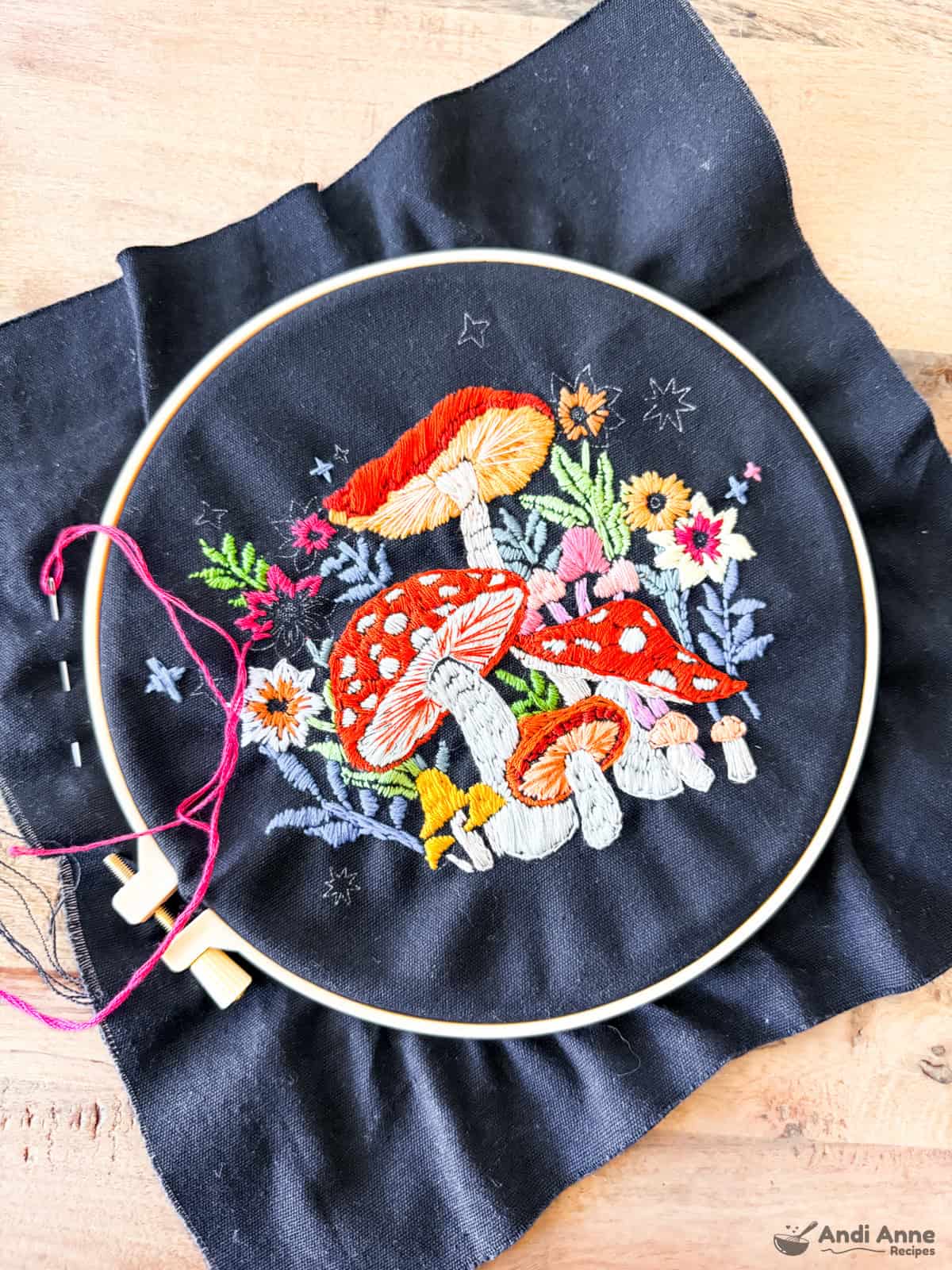
A little more advanced and takes more time. I started this mushroom garden embroidery kit this summer while camping, and it's such a nice relaxing craft to work on. Start with a beginner embroidery kit that already includes the pattern, thread and instructions. Once you learn a handful of stitches, you can start creating your own designs!
7. Watercolor Painting
You only need a small watercolor set, watercolor paper pad (this will prevent the paper from warping while you paint) and a few brushes to start. Follow beginner tutorials on youtube or just experiment with color without worrying about creating finished artwork.
8. Drawing
A sketchbook and pencil are enough. Try drawing flowers, objects around your house, faces, buildings or whatever catches your attention. There are loads of free tutorials on how to draw almost anything on youtube.
9. Knitting
Learn a couple of basic stitches from library books or youtube, and start with something forgiving like a scarf or dishcloth. It's particularly nice if you want something to do with your hands while listening to an audiobook or watching TV.
10. Crochet
Crochet is a little easier than knitting. It uses one hook rather than two knitting needles. Once you've learned a few basic stitches, you can make blankets, bags, clothing, baskets and little stuffed animals like this cute mini turtle kit.
11. Sewing
Buy a used sewing machine from your local thrift store and have it serviced if needed. Then start with simple projects like a pillow cover, pencil case or tote bags (follow tutorials on youtube). Pajama pants are a great place to start for clothing. You don't necessarily need to buy a machine right away - check whether your library, community center or local sewing studio offers classes or rents them out.
12. Quilting
If you love sewing, fabric and color, try a small patchwork project before committing to an entire quilt. But quilting is such a beautiful hobby. I've always wanted to hand-dye cotton using natural plant dyes then create a quilt from it. Folk Fibers' beautiful quilts and Quilts of Gee's Bend are such a creative inspirations to me!
13. Jewelry Making
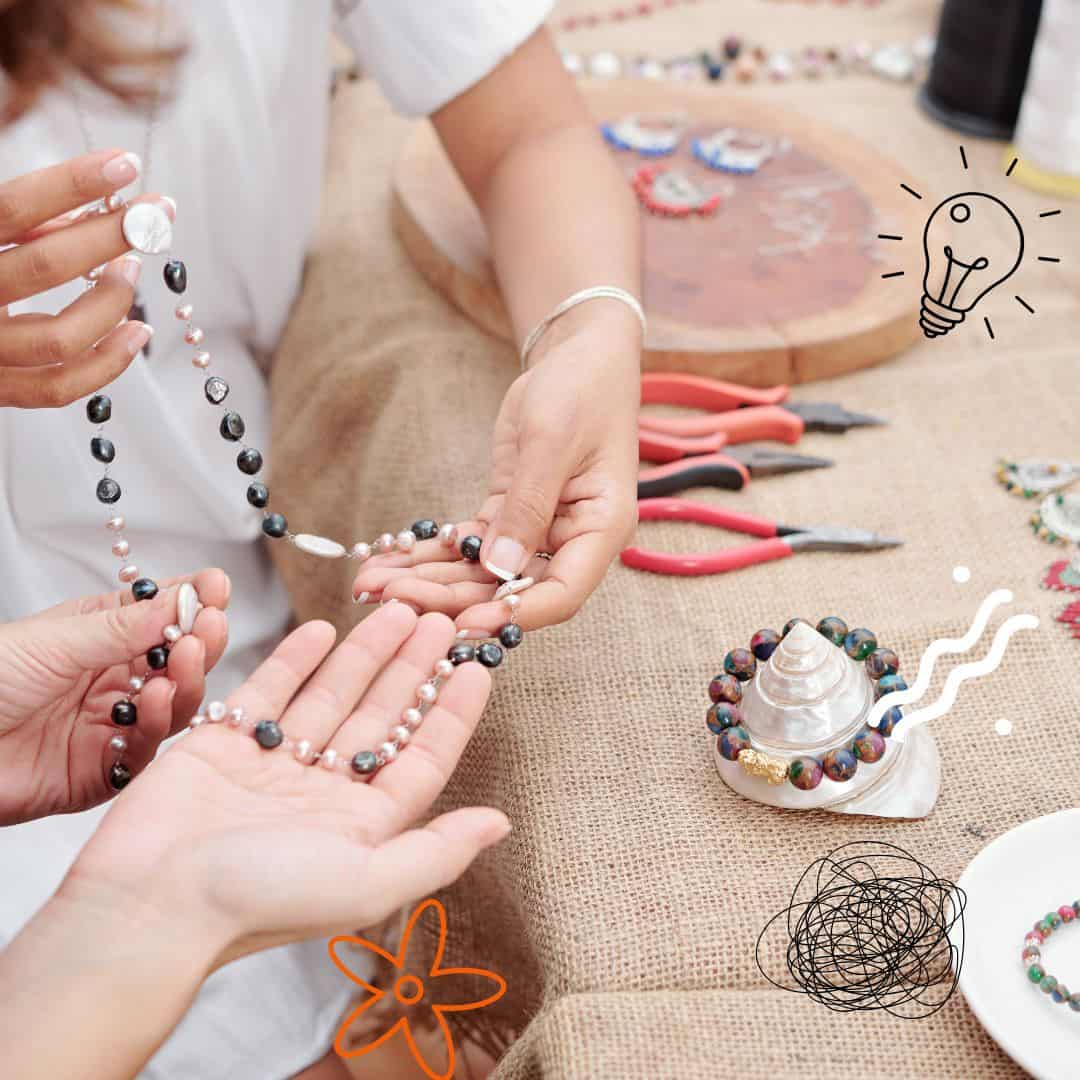
I used to make and sell jewelry at local craft markets. It's such a fun creative hobby to try. You can start with simple beaded bracelets and earrings, or eventually move into wire wrapping, metalwork or silversmithing. If you don't know where to start, try going to your local library and looking at different jewelry making books - see which styles you're drawn to.
14. Calligraphy & Hand Lettering
This is such a beautiful art form you can use to create cards, journaling or scrapbooking, artwork or even stickers. Brush pens and a beginner workbook are enough to get started. It's an easy creative hobby to practice for ten minutes at a time. There are so many beginner tutorials on youtube.
15. Scrapbooking
Print some of those thousands of photos sitting on your phone and turn them into albums you can actually flip through. You can use scrapbooking to document your year or special events like vacations and seasonal holidays. Papier has a lovely tutorial and the most beautiful journals, pens and stationary supplies. Also see paper high for some more visual inspiration.
16. Collage and Vision Boards
This is also called decoupage where you use magazine pages, photographs, old books, patterned paper, sewing patterns and whatever else you find interesting to create artwork, vision boards and mood boards. You will need some mod podge and a paintbrush or sponge.
17. Linocut Printing
Linocut is where you carve into a rubber block, roll ink over top and then stamp your image on to paper or fabric. It's particularly satisfying if you like bold, graphic art. You can buy linocut kits on Amazon.
Ps. You can also do this technique with potatoes! Carve out simple designs and stamp them on to wrapping paper or table napkins. Here's a lovely example tutorial.
18. Floral Crafts
If you love flowers, there are so many ways to turn them into a hobby beyond arranging a bouquet. Try pressing or drying flowers, making seasonal wreaths, creating dried flower arrangements, mixing homemade potpourri or preserving flowers from your own garden. Start with whatever catches your eye - you might find yourself growing flowers specifically for the projects you want to make.
19. Candle Making
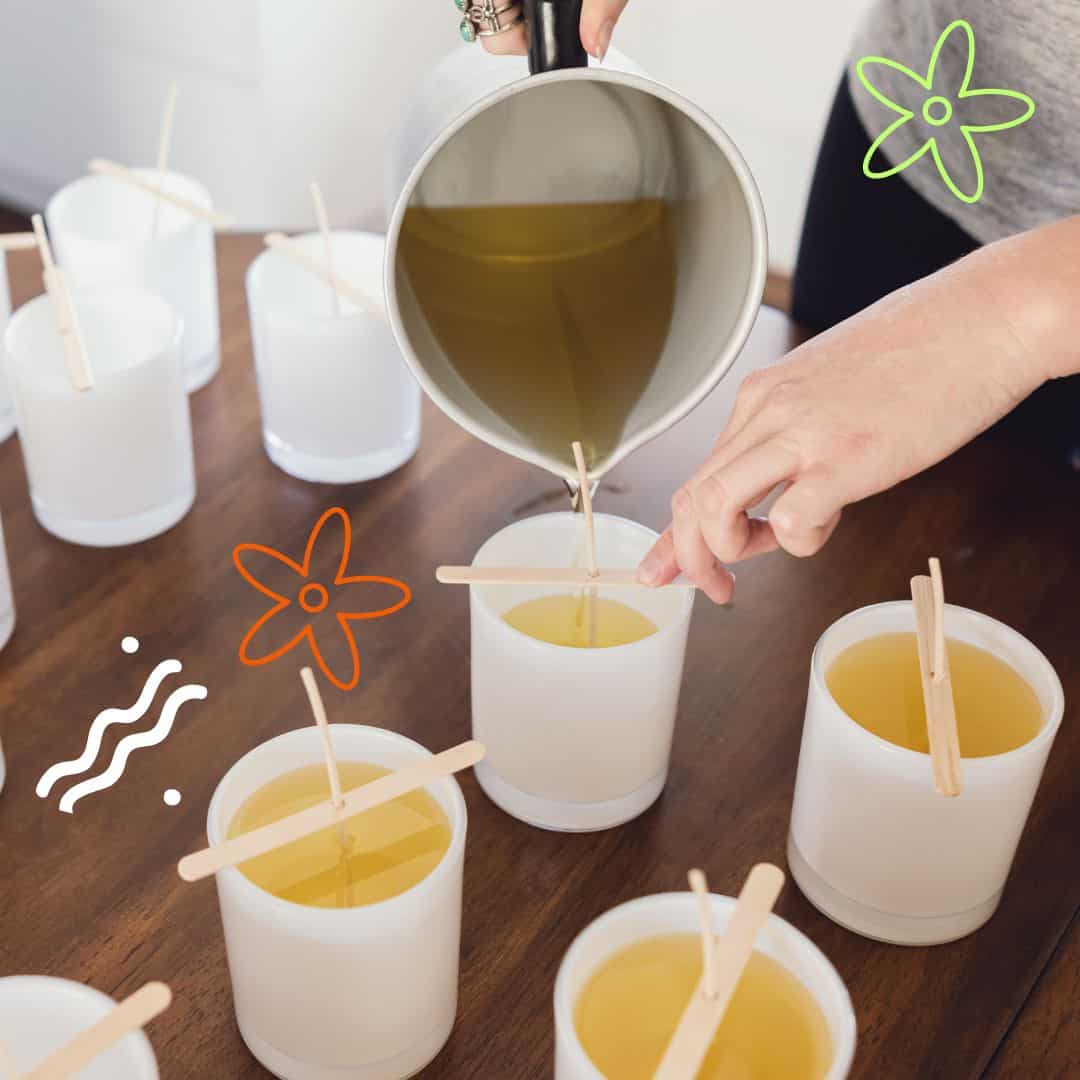
I went through a candle-making phase too, and this is a really fun one to experiment with. You can make candles with beeswax which has such a beautiful scent on its own, or soy wax, which has no scent and needs fragrance added. Try cotton wicks or wooden wicks, that create a lovely crackle sound as they burn. And play around with different scents until you find combinations you love.
I used simple mason jars as well as these amber glass jars, which looked beautiful AND made the house smell amazing.
You can also get creative with the finished candles - some people decorate them with things like shells or dried flowers. Start with a basic candle-making kit to learn how it all works, then experiment from there.
20. Creative Writing
You don't have to already be a good writer to make writing a hobby. I was terrible at essays in school and still don't consider myself a great writer, but it's something I'm trying to get better at.
I recently read Bird by Bird by Anne Lamott, a wonderful book about writing and the creative process. It reminded me that writing is something you get better at by actually doing it.
Try short stories, personal essays, poetry, memoir or simply writing about your own life. The secret, just like anything else, is to practice. Many writers recommend writing every single day, even if it's just for 10 minutes. You never have to publish it or show it to anyone - the point can simply be to write.
I Want to Move My Body
Exercise doesn't have to be another thing on your to-do list.
Finding a way you genuinely enjoy moving your body can become a hobby in itself, and suddenly you're doing it because you want to rather than because you're supposed to.
21. Yoga
Yoga has been a big part of helping me recover from burnout and manage intense stress this past year. I primarily go to restorative yoga, which is very low-key and incredibly relaxing - exactly what I needed. There are so many different styles to try, from gentle restorative and yin yoga to hot yoga and more athletic classes, so it's worth experimenting until you find one that feels good for you.
22. Pilates
Pilates is a great hobby if you want to get stronger, improve your posture and build better balance and flexibility. You can start with mat Pilates at home with very little equipment or try a reformer class at a local studio. As you learn the basics and build strength, there are always new exercises and more challenging movements to work toward.
23. Walking
Yes, walking absolutely counts as a hobby. Try new routes, listen to audiobooks or podcasts, explore different neighborhoods, or join a walking group.
You can also track your daily steps using an inexpensive step tracker, and set little goals for yourself, which turns it into a surprisingly fun game to see how much you can walk each day.
I also use a walking pad under my adjustable standing desk, so I can get extra steps in while I'm working at my computer-especially on days when I'm sitting at my desk for hours.
24. Hiking
Hiking is a wonderful way to get out into nature, slow down and clear your head. There's something incredibly relaxing about being surrounded by trees, mountains or open space and getting away from screens and everyday noise for a while. Start with easy local trails and gradually explore farther from home, or join a local hiking group if you'd like to meet people and discover new trails.
25. Swimming
Swimming is a great low-impact way to move your body, and it can be as relaxing or challenging as you want it to be. Try swimming laps at a local pool, join an adult swim class, or simply swim recreationally. Water fitness and aqua aerobics classes are another fun option if you prefer exercising with a group.
26. Cycling
Biking has always been one of my favorite ways to get outside. We have a great pathway system in our city, and I love biking along the river, riding to the library or making a trip out of biking somewhere to get ice cream.
You can explore your local bike paths, ride with friends, join a cycling group or gradually work toward longer routes as you get stronger.
27. Running
You definitely don't need to become a marathon runner to make running a hobby. Start with a beginner walk-run program and slowly work toward running your first comfortable 5K. You can track your routes and progress, sign up for a fun local race, or join a beginner running group if you want to make it more social.
28. Dance
Try salsa, ballroom, hip-hop, tap, ballet or line dancing. Look specifically for adult beginner classes - you don't need childhood dance experience.
29. Pickleball
This one is on my own hobbies-to-try list! A huge pickleball center just opened about 10 minutes from us, so I'm planning to sign up for a beginner class and wrangle my husband into trying it with me.
Pickleball is relatively easy to learn, great exercise and naturally social. Look for beginner lessons, drop-in sessions or a local league in your community.
30. Tennis
Tennis is a fun hobby that combines exercise, coordination and a little friendly competition.
If you've never played before, start with a beginner lesson or convince a friend to learn with you. Once you know the basics, you can book a court for casual games, join a local tennis club or eventually try playing doubles.
31. Golf
Golf is a great hobby if you enjoy being outside and like having a skill you can continually work on. Start at a driving range or take a beginner lesson to learn the basics before worrying about playing a full round. You can also try a shorter par-3 course, play with friends or your partner, or head to an indoor golf simulator during the winter.
32. Rock Climbing
Rock climbing is a fun way to challenge yourself physically while also working on balance, strength and problem-solving.
Indoor climbing gyms are an easy place to start and usually offer beginner lessons and equipment rentals, so you can try it without buying a bunch of gear.
You can also try bouldering, which uses shorter climbing walls without ropes and is another great option for beginners.
33. Paddleboarding
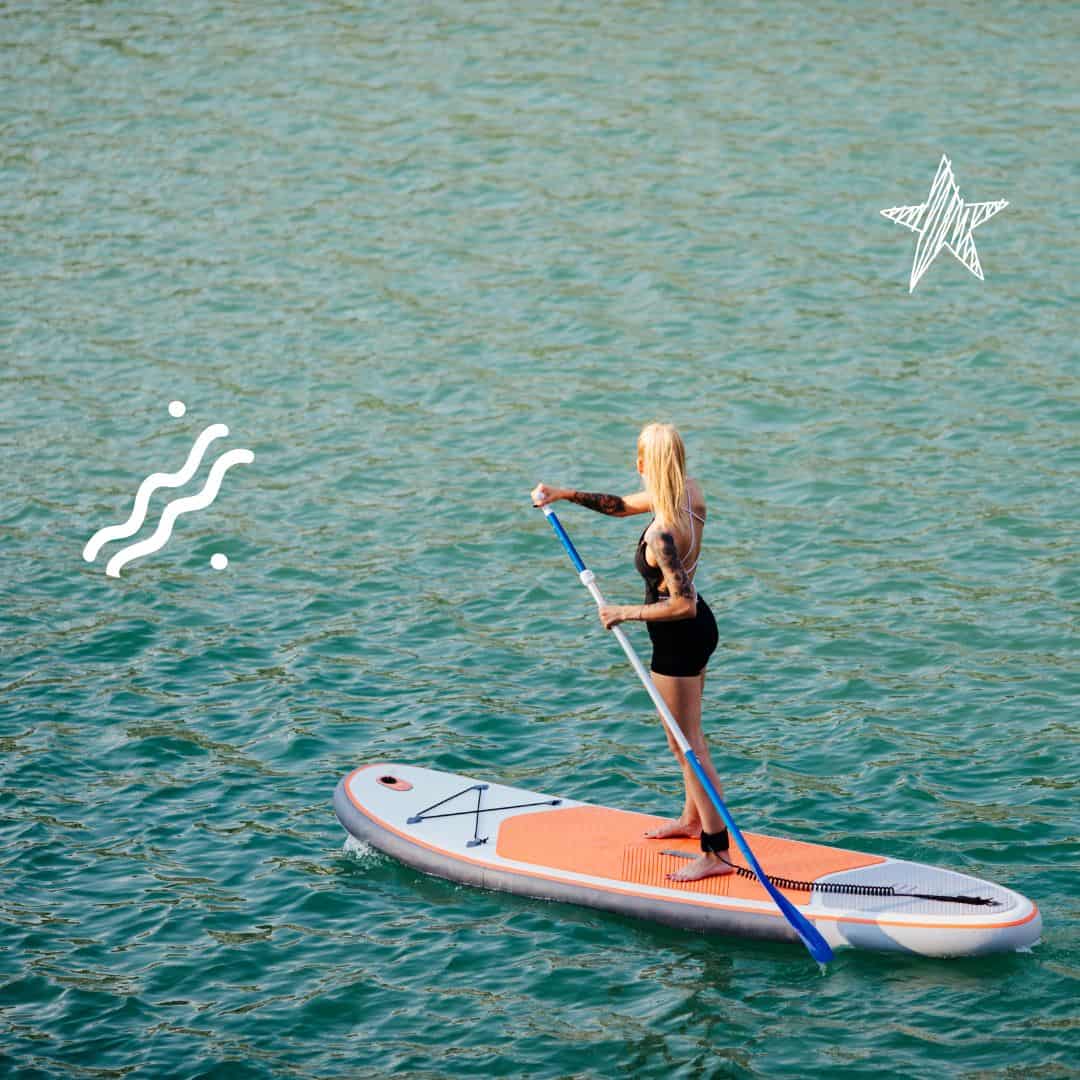
We bought two inflatable paddleboards from Costco and use them all the time. I love the inflatable ones because they're easy to store and we can throw them in the camper when we go camping.
They're such a fun way to get out on the water, explore a lake and get some movement in at the same time. If you've never tried it, rent a board first or look for a beginner lesson on calm water.
34. Kayaking
Kayaking is another great way to get out on the water and spend time in nature. Explore nearby lakes, rivers and calm waterways, paddle at your own pace, or make a day of it and pack a picnic.
If you're new to kayaking, you can usually rent one at local lakes or recreation areas before deciding if you want your own.
35. Roller Skating / Blading
Roller skating or rollerblading is such a fun way to get moving, and it might bring back memories if you haven't done it since you were a kid. Head to a local skating rink or find a smooth outdoor pathway where you can practice at your own pace. Put on some music, bring a friend, and don't forget a helmet and protective gear while you're getting the hang of it again.
I Need Something Relaxing
Maybe you don't need another challenge.
Maybe you need something that makes your brain quiet down for a little while.
36. Reading
If you never know what to read next, ask ChatGPT for recommendations based on books you've already loved. I did this with business books and ended up with a huge summer reading list that I was genuinely excited about.
I also recently bought a Kindle Scribe and love being able to highlight passages and keep my notes all in one place as I read.
Keep refining your reading list as you go by noting what you loved (and what you didn't), and you'll always have something you're excited to read next.
37. Jigsaw Puzzles
Jigsaw puzzles are an easy, relaxing hobby that doesn't have to cost much. Thrift stores are usually full of them for just a few dollars.
Leave one out and work on it whenever you have a few minutes, or use a rolling puzzle mat so you can tuck it away when you need the space.
38. Crosswords
Crosswords are a fun way to challenge your brain and learn random bits of trivia along the way. Grab an inexpensive crossword book, do the puzzle in your newspaper, or use an app on your phone. Make it part of your morning coffee routine. I like to bring a crossword book along when I travel, or you can keep one beside the couch for those times you'd normally reach for your phone.
39. Sudoku
If you prefer numbers and logic to word puzzles, give Sudoku a try. You can grab an inexpensive puzzle book or use an app, and there are difficulty levels for everyone from complete beginners to people who want a serious challenge. It's an easy hobby to take anywhere and a nice alternative to automatically reaching for your phone when you have a few quiet minutes.
40. Journaling
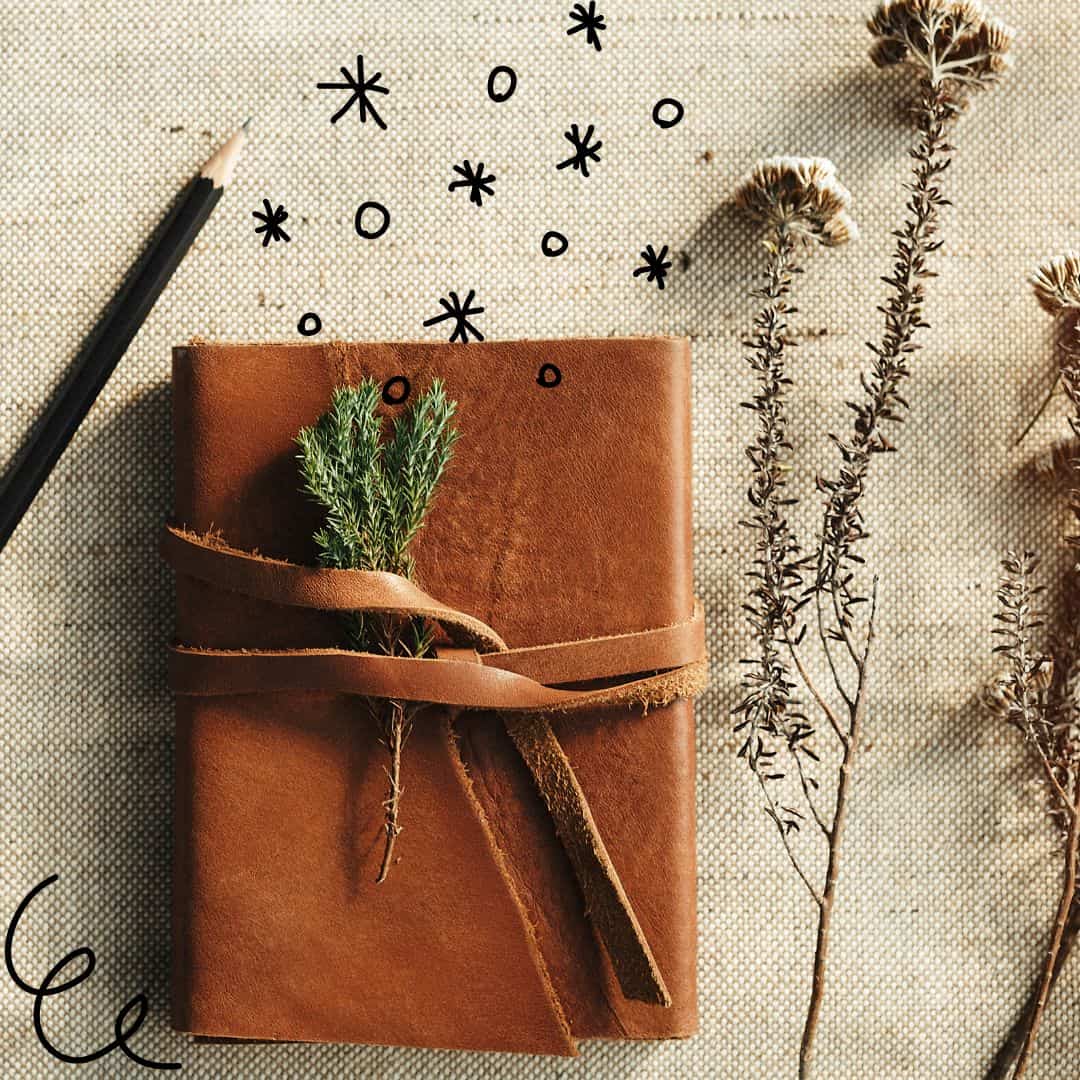
Journaling can absolutely be a traditional diary where you write about your day, but it can also be whatever you want it to be. Try gratitude lists, morning pages like the 5-minute journal, guided journal prompts, goal setting like the life designer journal, or simply getting whatever is on your mind onto paper. Buy yourself a notebook you love and experiment with different styles until you find one you actually look forward to using.
41. Gardening
Gardening isn't really my thing, but my mom, brother and sisters-in-law all love it. You can start small with a few containers, a raised garden bed, flowers or herbs and build from there. We're actually thinking about trying hydroponic gardening in our basement this year, which could be a fun option if you don't have much outdoor space or want to keep growing through the winter.
42. Birdwatching
I've always loved the movie The Big Year with Steve Martin, Jack Black and Owen Wilson, where they're competing to see who can spot the most bird species in a year.
You definitely don't have to take birdwatching that seriously, but it shows how much fun there can be in keeping track of what you find. Start by noticing the birds in your own backyard or neighborhood, learn to identify them by sight and sound, grab a pair of binoculars, and keep a list of the species you've spotted.
43. Baking
Choose one thing you'd love to become good at - pies, cookies, cakes, pastries or bread - and slowly work through different techniques. There's lots of great tutorials on youtube!
44. Bread Making
Bread can easily become a hobby of its own. Experiment with focaccia, baguettes, sandwich loaves, the oh-so-popular sourdough. You can also play around with different flours.
45. Tea
Tea can become a whole hobby once you start exploring beyond the basic tea bags at the grocery store.
Try different loose-leaf teas, herbal blends, matcha and teas from around the world, and experiment with different brewing methods and temperatures. Visit local tea shops, find a beautiful teapot or mug you love, and keep track of your favorites as you try them.
46. Coffee
I'm not a coffee drinker, but my husband definitely is! Whenever we travel, we love finding cool local coffee shops to try.
If you love coffee, turn it into a hobby by exploring independent cafés and different beans, or learn pour-over, espresso and latte art at home. You could even keep a list of your favorite coffee shops and make a point of finding a new one whenever you travel.
47. Pressing Flowers
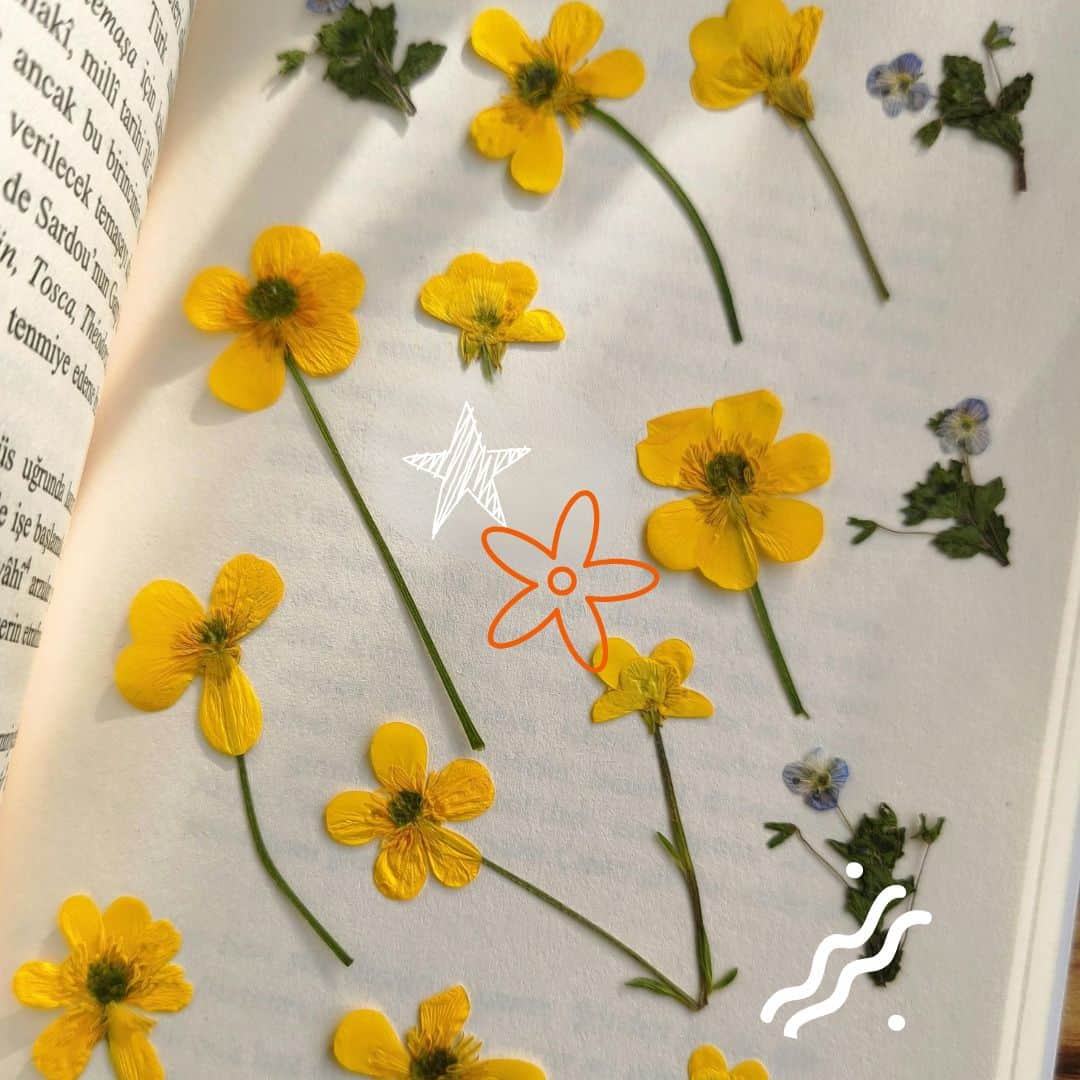
Press flowers from your garden, walks or special occasions and turn them into framed art, cards, bookmarks or journal pages.
You don't need anything fancy to get started - you can press flowers between sheets of wax paper inside a large, heavy book. Or buy a proper flower press if you really get into it.
I've always loved pressing flowers! It's a lovely way to preserve flowers that have a special memory attached to them. I have pressed flowers from our wedding, anniversaries, even my high school graduation!
48. Stargazing
My husband loves stargazing, so one year for Christmas I bought him a telescope from Costco.
You don't need a telescope to start, though - learn a few constellations, watch for meteor showers and other astronomical events, or download a stargazing app to help identify what you're seeing in the night sky. If you really get into it, a telescope gives you even more to explore.
49. Nature Journaling
Nature journaling is a mix of observing, sketching and writing about what you notice outside. Bring a notebook on walks or keep one in your backyard and record things like birds you've spotted, flowers and plants, weather, changing seasons or little sketches of what you see.
You don't have to be good at drawing - the fun is really in slowing down and noticing things you might normally walk right past.
If you want help getting started, naturalist and educator John Muir Laws has a great free guide on how to start and grow a nature-journaling practice, including ideas for what to observe and record.
50. Letter Writing
There's something special about getting an actual handwritten letter in the mail. Find a pen pal, write to a friend or family member who lives far away, or start sending cards and little notes to people you care about just because. Make it even more fun by collecting beautiful stationery, cards, stamps and pens that you genuinely enjoy using.
If you don't have someone to write to, PenPal matches people based on mutual interests and lets you create postcards that are physically mailed, while keeping your home address hidden behind your username.
I Want to Get Out of the House
Sometimes you don't need something to do at home.
You need a reason to leave it.
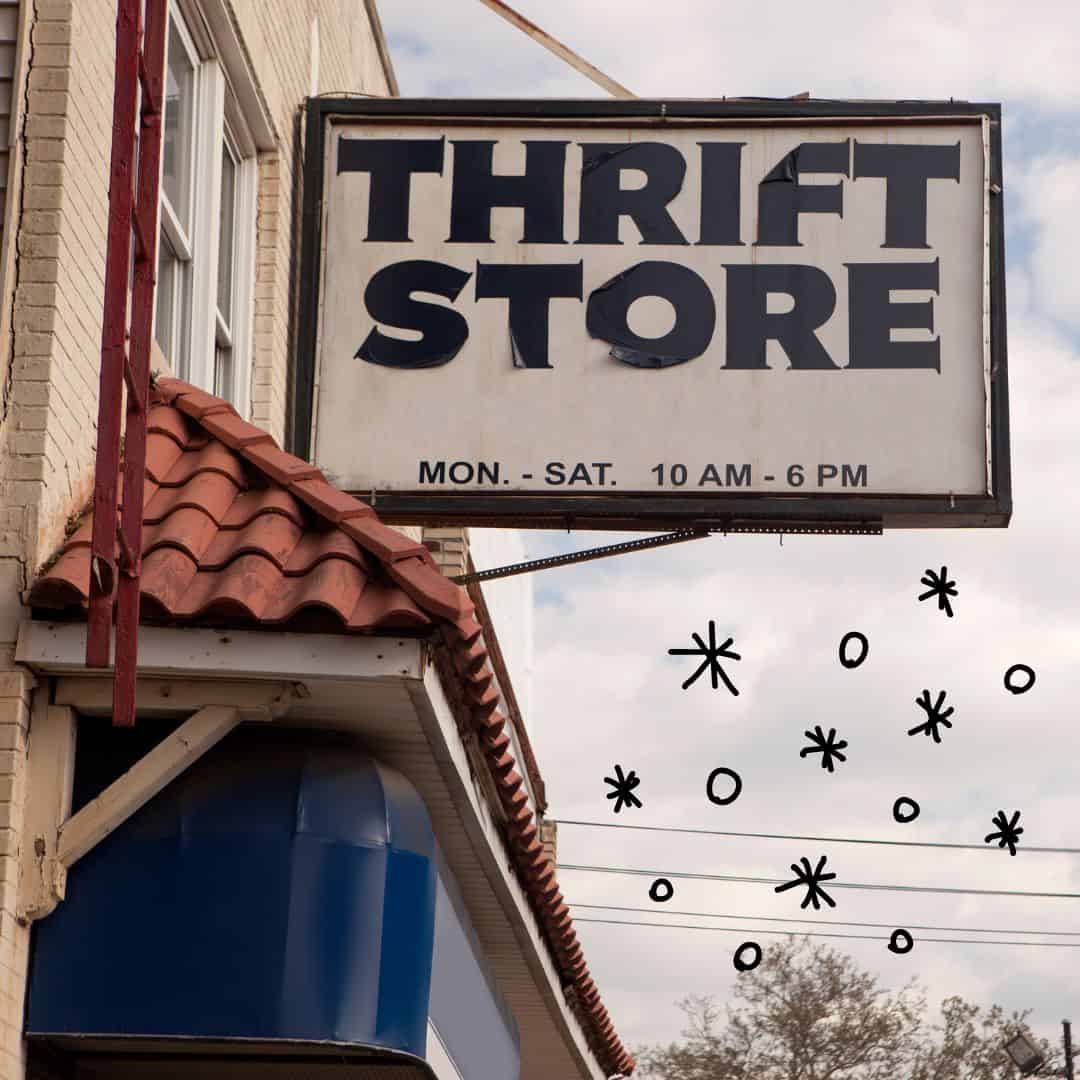
51. Thrifting
I've been a big thrifter since my early 20s, and it's still one of my favorite ways to pass some time. I love hunting for home decor, records and sweaters, and I thrift a lot of my daughter's clothes too.
Part of the fun is that you never really know what you're going to find. Give yourself something specific to hunt for, visit different thrift stores in your area (and thrift stores when you're on vacation too!), or just wander the aisles and see what catches your eye.
52. Antiquing
My mom used to own an antique store, so I've been around antiques for a long time. I love visiting antique stores and markets, but estate sales are especially fun because there's usually a whole house full of things to look through - from furniture and artwork to dishes, jewelry, books and all kinds of unexpected finds. PLUS things are usually priced more affordably at estate sales.
You can Google estate sale companies in your area and follow their upcoming sales. For popular ones, you'll often want to arrive early and get a number, which determines the order people are allowed into the home. Then the fun is in wandering through and seeing what treasures you can find.
53. Photography Walks
Turn an ordinary walk into a creative project by heading out specifically to take photos. Pick a neighborhood, park, downtown area or nature trail and photograph whatever catches your eye - interesting buildings, flowers, shadows, signs, textures or everyday moments.
You don't need a fancy camera either; your phone is more than enough. Giving yourself a theme or photo challenge for the day can make it even more fun.
54. Geocaching
Geocaching is basically a giant worldwide treasure hunt. You use the Geocaching app or GPS coordinates to search for containers that other people have hidden in parks, neighborhoods, along trails and in some surprisingly sneaky places.
When you find one, you sign the logbook and put it back exactly where you found it. Some caches even contain little trinkets you can trade. It's a fun way to turn an ordinary walk, hike or road trip into an adventure.
55. Camping
My family camped a lot when I was a kid, and some of my fondest childhood memories are from those trips. I knew I wanted to create that same experience for my daughter, so we started tent camping and did that for many years before eventually buying a camper.
You don't need much to get started - pick a campground close to home, borrow or buy some basic gear (or look for it at thrift stores), and spend a weekend outside exploring, swimming, roasting hot dogs and marshmallows and slowing down together.
56. Fishing
Fishing is a great excuse to spend a slow morning or afternoon outside by the water. Start with a basic rod and learn how to cast, then explore lakes, rivers or stocked ponds in your area. You can fish from shore, a dock or boat, and make a whole day of it with a picnic or camping trip. Just be sure to check your local fishing licence and regulations before you head out.
57. Rockhounding
If you're the kind of person who can't walk past a cool rock without picking it up, rockhounding might be your hobby. Look for interesting rocks, crystals, minerals and fossils while hiking, camping or visiting areas known for good finds, then bring them home and learn how to identify what you've collected. You can even buy a rock tumbler to polish some of your finds. Just make sure collecting is permitted wherever you're exploring.
58. Foraging
Foraging doesn't have to be about finding things to eat. Head out into nature and collect beautiful materials for creative projects - fallen branches, leaves, pinecones, seed pods, grasses and flowers where picking is permitted.
Use what you find to make seasonal wreaths, press flowers, create dried arrangements or decorate your home. It's a lovely way to combine getting outside with making something afterward.
59. Museum Hopping
Make a list of museums you've never visited and slowly work your way through them - from big art and history museums to tiny local museums devoted to surprisingly specific things.
Check for new exhibitions, special events and free-admission days, and make a point of visiting museums when you travel too. You might be surprised by how many interesting ones are hiding close to home.
60. Art Galleries
Visiting art galleries is a fun way to discover new artists and see work you probably wouldn't come across otherwise. Look beyond the big galleries and check out smaller local and artist-run spaces too.
Keep an eye out for exhibition openings and artist talks, which are often free to attend, and make a point of visiting galleries when you travel - you might even find an original piece you love enough to bring home.
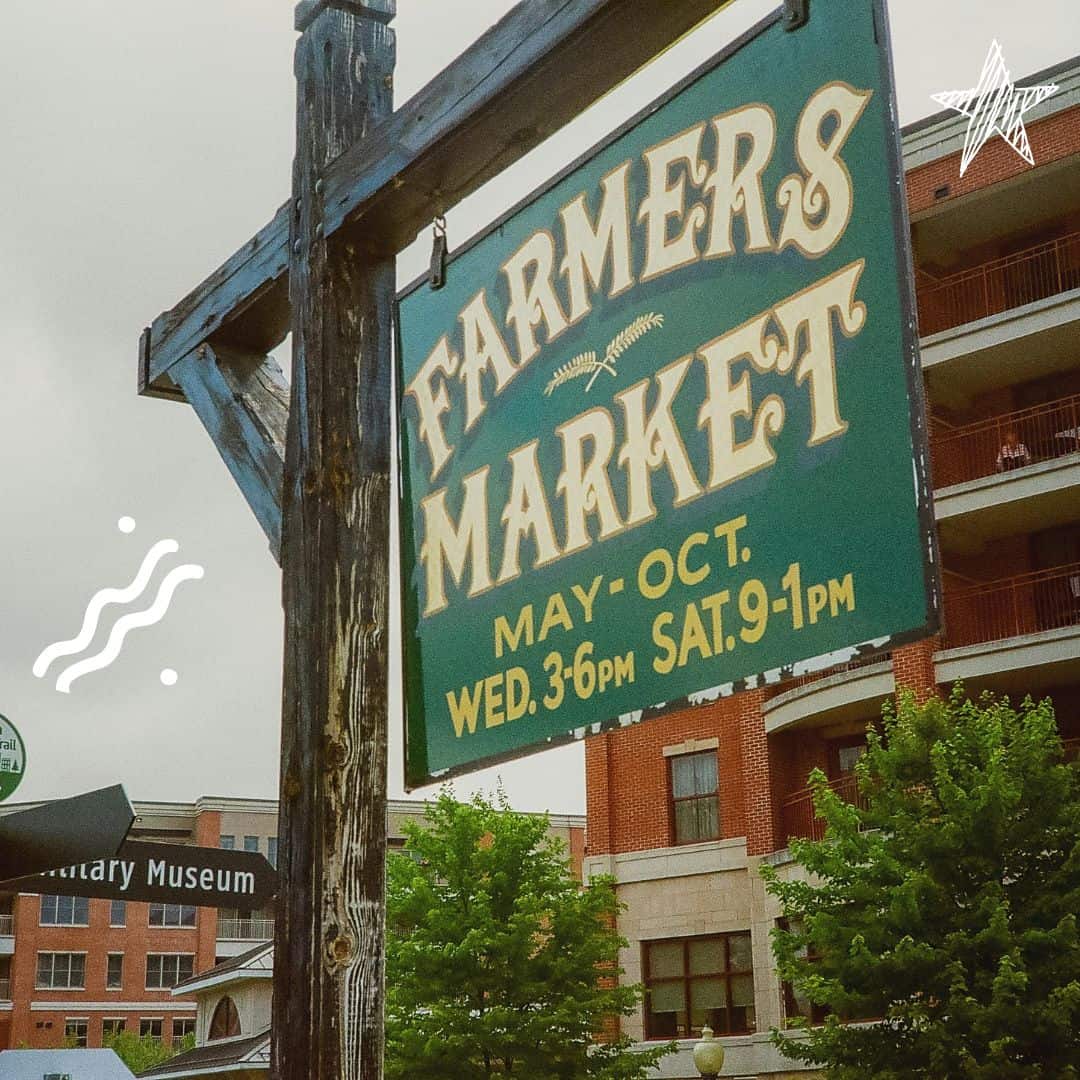
61. Farmers' Markets
I love farmers' markets, and they're one of my favorite things to seek out when we're travelling because they're so different depending on where you are.
We recently visited the farmers' market in Laguna Beach, and it was completely different from the markets we have here in Canada. You get to discover local produce, food, flowers and makers you wouldn't normally come across.
Explore the markets around where you live, and whenever you travel somewhere new, look up whether there's a farmers' market happening while you're there.
62. Flea Markets
Flea markets are perfect if you love the thrill of never knowing what you'll find. Wander through stalls filled with vintage clothing, jewelry, records, art, collectibles and quirky one-of-a-kind pieces. Go with something specific on your wish list or simply browse and see what catches your eye. They're also a fun weekend outing, even when you come home empty-handed.
63. Exploring Local History
You might be surprised by how much history is hiding right where you live. Look for local walking tours, historic neighborhoods and buildings, heritage sites, or even ghost tours that share the stories and legends of your area.
Check museums, tourism websites and community event calendars for guided tours and special events - or research a few interesting places yourself and create your own little history tour.
64. Community Classes
Community classes are one of the easiest ways to try a hobby without committing to buying all the supplies first. Check your city's recreation guide, local library, community centre, continuing-education programs, art studios and Facebook events for upcoming classes.
Look for one-night workshops or beginner sessions in things like pottery, painting, cooking, photography, sewing or dance. Pick something you've always been curious about and just try one class - you don't have to sign up for an entire semester.
65. Day Trips
Make a list of interesting places within an hour or two of home and start exploring them one at a time. Look for small towns, lakes, hiking trails, historic sites, markets, festivals or roadside attractions you've always driven past but never stopped at.
I also love using Google Maps to poke around an area and see what's nearby - pick a destination, find somewhere interesting for lunch, and turn an ordinary Saturday into a mini adventure.
I Want to Meet People
Making friends as an adult can be hard.
A hobby makes it easier because you don't have to walk into a room with the sole purpose of making friends. You're there to do something-and getting to know people happens naturally along the way.
66. Join a Book Club
A book club gives you a reason to read something new and regularly get together with other people. To find one locally, check your library and independent bookstores, search Facebook Groups or Meetup, or Google "book clubs near me."
There are also plenty of online book clubs if you'd rather participate from home. And if you can't find one you like, start your own! Invite a few friends, choose one book a month and take turns hosting. Keep it casual; half the fun is usually the conversation that has nothing to do with the book.
67. Join a Walking Club
If you want to meet new people but hate the idea of awkwardly standing around making small talk, a walking club is a great option because you're actually doing something while you chat. Some groups stick to neighborhood walks while others explore local trails or meet for coffee afterward. You could also make your own weekly walking date with a few friends and rotate who chooses the route each week.
68. Join a Running Club
You don't have to be a serious runner to join a running club. Many local running stores organize free weekly runs with different pace groups, including beginners, and some offer learn-to-run programs if you're starting from scratch.
It's a great way to stay motivated, discover new routes and eventually have people to sign up for a fun 5K or local race with.
69. Join a Choir
If you love singing in the car or belting out songs when no one's around, joining a choir could be a lot of fun. Many community choirs don't require any previous singing experience, and some don't even require an audition. You can simply show up and learn as you go. Look for community, pop or seasonal choirs in your area and find one that feels relaxed and welcoming.
70. Community Theatre
Community theatre isn't just for people who want to be on stage. Local productions need all kinds of help behind the scenes too - building and painting sets, finding props, sewing costumes, doing hair and makeup, running lights or helping backstage.
If performing does sound fun, watch for open auditions; otherwise, contact a local theatre group and ask how you can get involved with an upcoming production.
71. Volunteer
Think about what you already care about and start there - animals, food programs, seniors, kids, arts, sports, museums, community gardens or local events. Check your town or city's website for volunteer opportunities, look at local nonprofits and charities directly, or search "volunteer opportunities near me."
Volunteer centres and sites like VolunteerMatch can also help you find organizations looking for help. If you don't want a weekly commitment, look for one-time opportunities at festivals, fundraisers, races and community events.
72. Learn Mah-jongg
Mah-jongg is a social tile game that's full of strategy and takes time to really master, which makes it a great long-term hobby. Look for beginner lessons at community centres, libraries or local game shops, or learn with a group of friends and make a regular game night out of it. You can also start by learning online before joining an in-person group.
73. Trivia Nights
Trivia nights are such an easy way to turn an ordinary weeknight into something you actually look forward to. Pubs, breweries and restaurants often host weekly trivia -check their event calendars or search "trivia night near me."
Put together a team of friends with completely different areas of useless knowledge, pick a ridiculous team name, and make it a regular night out.
74. Board Game Nights
Board games have come a long way from Monopoly and Scrabble. Try strategy games, mysteries, cooperative games, card games or quick party games until you figure out what your group loves.
Invite a few friends over for a monthly game night, have everyone bring a favorite game and some snacks, or check whether you have a local board-game café where you can try a whole library of games before buying your own.
75. Join a Supper Club
A supper club is a fun excuse to get together regularly and try new food. Start one with a few friends and meet once a month, taking turns hosting or choosing a new restaurant to try.
You could give each dinner a theme - Italian night, foods from a particular country, appetizers only - or make it a mission to work your way through restaurants you've always wanted to visit.
76. Join a Recreational Sports League
You don't have to be particularly athletic, or even very good to join a recreational sports league. Look for casual adult volleyball, softball, soccer, curling, bowling or whatever is popular in your area.
Check your local recreation centre, city programs or community sports leagues for beginner or recreational divisions. It's a fun way to get moving and meet people regularly, especially if you miss the team sports you played when you were younger.
77. Join a Community Garden
Community gardens give you a little plot of your own to grow vegetables, herbs or flowers - even if you don't have much garden space at home. There's one at the pottery studio I'm a member at, and we have tons scattered throughout different communities in our city too.
Check your city's website, community associations or local garden groups to find one near you. It's also a nice way to meet other gardeners, swap tips and learn as you grow.
78. Language Exchange
A language exchange lets you practice a new language with an actual person instead of only learning from an app. You might spend half the conversation speaking the language you're learning and the other half helping your partner practice English.
Look for local conversation groups at libraries, universities and cultural centres, or use an online language-exchange community to connect with people around the world. It's a great way to learn the everyday language people actually use while getting to know someone from somewhere else.
79. Take Cooking Classes
Cooking classes are a fun way to learn something you probably wouldn't attempt on your own. Try pasta making, sushi rolling, bread baking, cake decorating or a cuisine you've always wanted to learn.
Check local cooking schools, specialty food stores, restaurants and community programs for one-night workshops. It's also a great hobby to do with a friend or partner - and you get to eat what you make at the end!
80. Start a Craft Night
Invite a few friends over for a casual craft night where everyone brings whatever they're currently working on - knitting, crochet, embroidery, coloring, scrapbooking or something completely different.
Put out some snacks, make tea, turn on some music and work on your projects while you catch up. You could rotate houses each month or choose a simple new craft to try together occasionally.
I Want to Learn Something
Maybe your favorite hobby is learning.
You don't need a certificate, career goal or practical reason. You're allowed to learn something simply because you're curious about it. My daughter is currently in kumon and there is a 70-year-old woman also in the program simply because she wants to learn math for fun!
81. Learn a Language
Choose a language you've always wanted to speak and make learning it an ongoing hobby. Start with an app like Duolingo, listen to beginner podcasts, watch shows with subtitles, or take a local or online class for more structure.
If you're planning a trip, learning some of the language beforehand can give you a fun goal to work toward - and eventually you can practice what you've learned with a language exchange partner.
82. Learn Guitar
This is my daughter's current hobby! She's learning with the Justin Guitar app, which gives her structured lessons she can work through at her own pace.
You don't need any ambitions of performing - start by learning a few basic chords and work toward playing songs you actually love. It's one of those hobbies where you can really notice yourself improving the more you practice.
83. Learn Piano
Piano is another hobby you can learn at almost any age. Take lessons with a local teacher, join a beginner group class, or use an online program at home if you prefer learning on your own schedule.
Hoffman Academy is a good option for free structured piano lessons that teach things like reading music, rhythm and technique rather than simply teaching you how to play individual songs.
A digital keyboard is an easy way to get started without needing a full piano, and learning music you actually enjoy makes practicing much more fun.
84. Take a Painting Class
You don't need to know how to paint before taking a class - that's the whole point! Look for beginner painting classes at local art studios, community centres or art schools, or try a casual paint night with friends where everything is supplied for you.
Experiment with acrylics, oils or even a large canvas and see what you enjoy. It's a fun way to learn actual painting techniques without having to figure out all the supplies on your own.
85. Genealogy
Genealogy can turn into a fascinating rabbit hole once you start uncovering your family's history. Start by talking to older relatives and collecting names, dates, old photographs and family stories, then use a genealogy site like Ancestry to start building your family tree and searching historical records.
Keep everything you discover organized as you go - you may uncover stories about your family that no one knew before.
86. Learn Interior Design
Turn decorating your own home into a hobby by learning some of the basics of interior design. Explore things like space planning, color, lighting, furniture placement, scale and different design styles, then experiment with what you learn in your own rooms.
Create mood boards on Pinterest, rearrange furniture, thrift interesting pieces and slowly figure out what your personal style actually is. You can learn the basics for free on YouTube or take a more structured beginner course through Skillshare or Udemy.
87. Art History
I took art history classes in school and loved how intertwined art is with history. There's so much more happening in a painting than what you see at first - it can feel a bit like uncovering a code.
A dog in a Renaissance portrait might symbolize loyalty or fidelity, an expensive red or ultramarine-blue garment could communicate wealth and status, and something as simple as a skull, extinguished candle or wilting flower could be a reminder of mortality and how quickly life passes.
Pick an artist, movement or period that interests you and start learning what all those little details actually meant to the people who first saw them.
Three fascinating artists to start with: Jan van Eyck for symbolism and tiny hidden details, Johannes Vermeer for clues about everyday life, class and domestic life in the 1600s, and Frida Kahlo for deeply personal symbolism woven through her self-portraits.
88. Grow a Bonsai Tree
Bonsai is the art of growing and shaping miniature trees, and it's a hobby you can keep learning for years. Start with a beginner-friendly tree and learn how to prune, wire, shape and care for it as it grows.
You can buy a starter bonsai from a local garden centre or bonsai nursery, or look for a beginner workshop where someone can teach you the basics.
89. Chess
Chess is easy to learn but can take a lifetime to master, which makes it a great hobby if you love strategy and problem-solving.
Start by learning how the pieces move, then work your way into tactics, openings and puzzles. You can play online against people at your skill level, take beginner lessons, or pick up a chess set and convince someone at home to learn with you.
90. Photography
You don't need an expensive camera to get into photography - the phone you already have is a great place to start. Learn a few basics like composition, lighting, perspective and editing, then give yourself little projects to practice what you've learned.
Try portraits, landscapes, food, architecture or everyday life and see what you're naturally drawn to photographing. If you want to go deeper, take an online photography course or eventually experiment with a DSLR or mirrorless camera.
91. Wine
If you already enjoy wine, turn it into a hobby by learning about different grape varieties, wine regions and how growing and production affect what ends up in your glass.
Visit wineries when you travel, book a guided tasting, take a wine class or host your own tasting night with friends. Keep notes on what you try - you'll gradually start figuring out the styles and regions you actually love.
92. Horseback Riding
You don't need to own a horse to make horseback riding a hobby. Look for a local stable that offers adult beginner lessons, where you can learn the basics of riding, grooming and being comfortable around horses.
As you gain confidence, you can try trail riding or continue with regular lessons and develop your skills over time.
93. Take an Online Course
Take an Online Course
Take a course simply because you're curious about something - not because it needs to improve your résumé or lead anywhere productive. Learn about psychology, science, writing, astronomy or something completely random. Platforms like Coursera, MasterClass and Skillshare make it easy to explore a subject from home, and you might stumble onto an entirely new interest along the way.
94. Attend Lectures & Workshops
Keep an eye out for local talks and workshops on subjects that interest you. Check libraries, universities, museums and cultural organizations, but also less obvious places like health-food stores, garden centres, wellness studios and chiropractic offices.
You can find everything from gardening and nutrition talks to author events, history lectures and hands-on workshops - and many are free or inexpensive.
95. Learn Sign Language
You can absolutely start learning sign language online. Look for courses taught by Deaf instructors where you can learn the alphabet, everyday signs, facial expressions and eventually full conversations.
ASL Connect from Gallaudet University is a reputable place to start if you want to learn American Sign Language (ASL), with online courses and learning resources.
I Want to Try Something Completely Different
Still haven't seen anything that made you think YES?
I've got some more unusual ideas...
96. Archery
Archery is a fun hobby if you like something that requires focus, patience and a bit of a challenge.
Look for an archery range or club in your area that offers beginner lessons - you can usually rent the bow and equipment while you learn proper technique and safety. If you enjoy it, you can eventually get your own equipment, join a club and work on improving your accuracy over time.
97. Glassblowing
Glassblowing is one of those hobbies that looks intimidating but could be right up your alley! Many local glass studios offer one-time beginner workshops where an instructor guides you through making something simple like an ornament or paperweight. All the equipment is usually provided.
98. Stained Glass
This one is on my hobbies-to-try list too! I love the idea of choosing beautiful pieces of colored glass and turning them into sun catchers, window panels or little pieces of art.
Look for a beginner stained-glass class at a local studio where they'll teach you how to cut, grind, foil and solder the glass safely. They usually provide the tools and supplies so you can try it before investing in your own.
99. Practice Public Speaking
If the idea of speaking in front of a group makes you nervous, you could actually turn getting better at it into a hobby.
Join a local Toastmasters club where you can practice giving speeches, telling stories and speaking off the cuff in a supportive environment. You don't need to have any public-speaking experience to join, and you can visit a club meeting first to see what it's like.
100. Beekeeping
My in-laws are beekeepers, and it's such an interesting hobby because there's so much to learn about how a hive actually works. If you're curious about keeping bees yourself, look for a local beekeeping association or beginner course where you can learn about hive care, equipment and harvesting honey before investing in your own setup.
You may even be able to connect with an experienced beekeeper and see what it's really like first.
Still Don't Know Which Hobby to Choose?
Here's the thing I learned from trying all those hobbies myself: You don't have to choose.
I didn't sit down one day, research every possible hobby and determine that pottery was the one.
I colored. Then I tried paint by number. Then punch needle. Then needlework. Then needle felting.
Eventually, I walked into a pottery studio - and that one stuck.
So instead of putting pressure on yourself to find your perfect hobby, choose three things from this list that made you curious.
Buy the inexpensive beginner kit. Book the introductory class. Borrow the equipment. Go to one meeting. Watch the beginner lesson. Give yourself permission to be absolutely terrible at it.
If you don't like it? Try something else.
Your hobby doesn't need to become part of your identity. It doesn't need to make you money. You don't need to show anyone what you made, track your progress or become particularly good at it.
It can simply be something you do because you enjoy doing it. And sometimes that's exactly what you need.



Leave a Reply